Meet Corvai, your AI assistant.
A few years ago, artificial intelligence felt like something reserved for tech giants with deep pockets and large engineering teams. In 2026, a bakery owner in Birmingham is using it to answer customer enquiries. A personal trainer in Manchester is using it to write their social media content. A solicitor in Leeds is using it to handle first contact with new clients.
AI has crossed over. It is no longer a future investment or a competitive advantage exclusive to big business. According to research published by LinkedIn, small businesses increased their AI investment by 58% in just two years. The question is no longer whether to use AI. It is where to start.
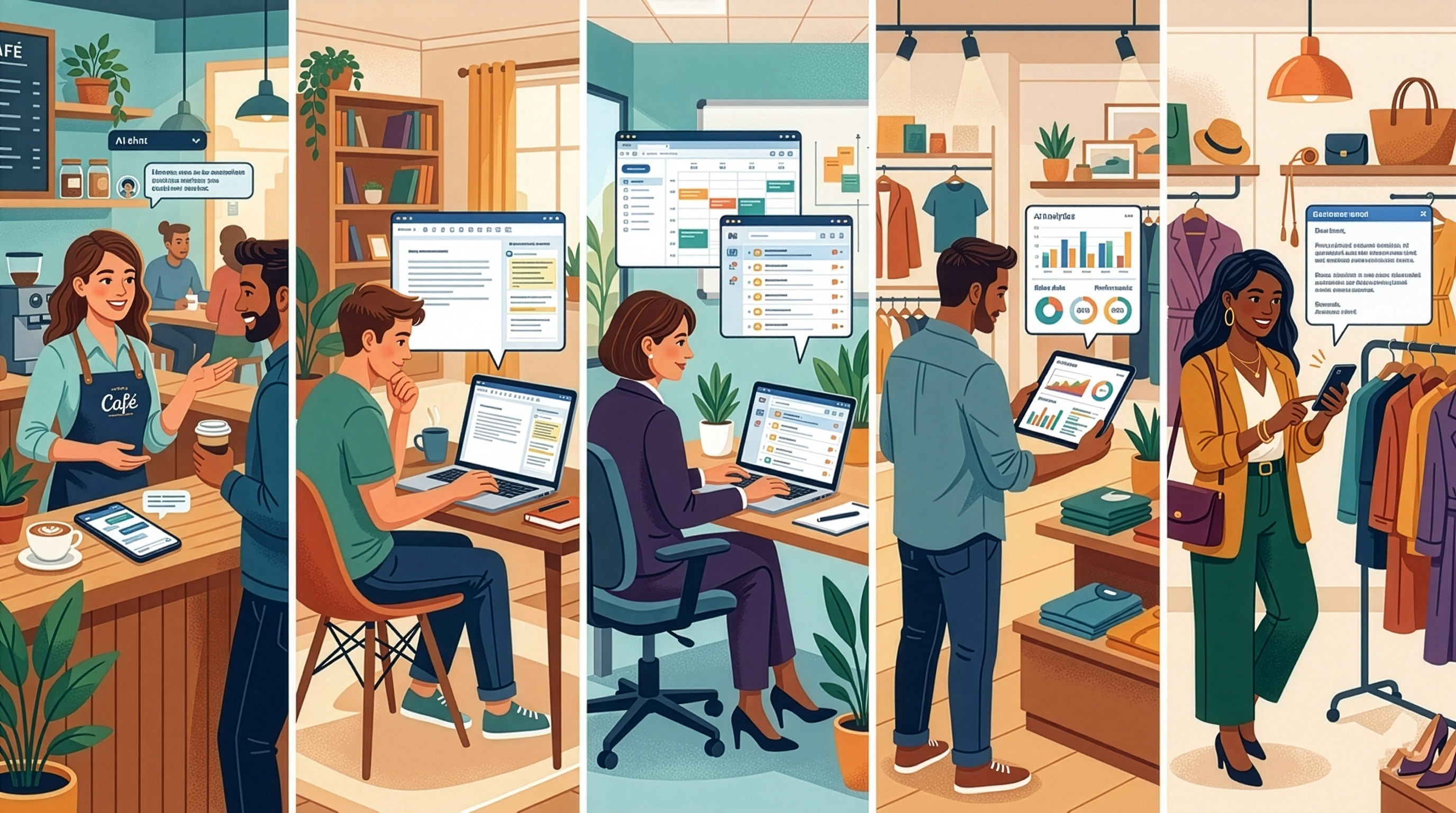
Here are five practical ways small businesses are using AI right now, what results they are seeing and how you can do the same.
98% of small businesses now use at least one AI-enabled software tool. AI has moved from experiment to essential.
Source: AP News, 2026
This is where most small businesses start, and for good reason. Customer enquiries are relentless. The same questions come in every day about opening hours, pricing, availability and services. Every one of those questions takes time to answer. Multiply that across evenings, weekends and bank holidays and you have a real problem.
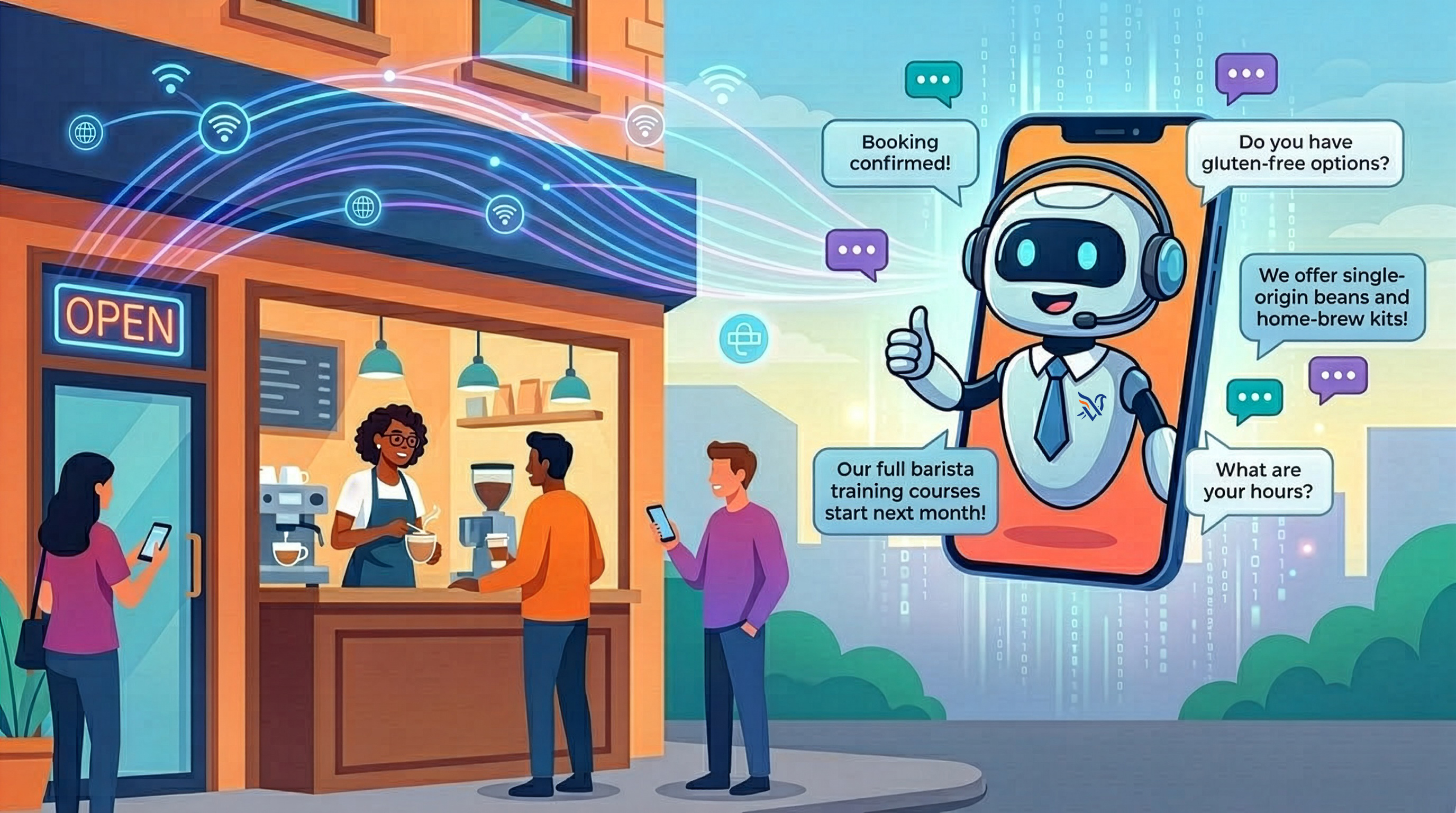
AI customer service tools learn from the information you give them, your website content, your FAQs, your service descriptions, and then answer customer questions automatically in real time. They handle the routine questions so your team does not have to, and they do it 24 hours a day.
The businesses seeing the biggest results from this are the ones that train their AI properly. The more specific and detailed the knowledge base, the better the answers. A well-trained AI customer service tool does not just save time. It captures leads that would otherwise have been lost after hours.
Content marketing is one of the most powerful ways to grow a small business online, but it is also one of the most time-consuming. Writing blog posts, social media captions, email newsletters and website copy demands consistent effort that most small business owners simply do not have.
AI writing tools have made this significantly easier. They can draft a blog post in minutes, suggest social media captions from a brief, write product descriptions and create email sequences. The key is to treat AI as a starting point, not a finished product. The businesses getting the best results use AI to create a first draft, then apply their own voice, expertise and knowledge to make it genuinely useful.
According to WordStream’s 2026 AI Marketing Trends report, Google rewards content that demonstrates real experience and expertise. AI can help you produce more content faster, but the human perspective and genuine insight still need to be there.
Think about how much time goes into tasks that are not your actual job. Booking appointments. Following up with enquiries. Sending invoices. Responding to the same email for the fifteenth time. Organising your calendar. For many small business owners, these tasks consume hours every week.
AI automation tools can handle a significant portion of this. Appointment booking systems with AI can manage your calendar, send reminders and handle rescheduling without you touching a thing. Email automation tools can send follow-up sequences based on what a customer has done. AI can even draft responses to enquiries for you to review and send with a single click.
Small businesses that adopt AI report streamlined operations, reduced costs and faster decision-making, creating space for innovation and relationship-building.
The goal is not to remove the human element from your business. It is to remove the parts of your day that drain your time and energy so you can focus on the work that actually requires you.
One of the most underused advantages of AI for small businesses is its ability to turn data into insight. Most businesses collect more data than they realise. Website visitors. Enquiry patterns. Conversation histories. Purchase behaviour. The problem is that making sense of it takes time and expertise that most small business owners do not have.
AI analytics tools can surface patterns in that data automatically. They can tell you which pages on your website are converting, which types of customers are most valuable, what questions your customers are asking most and where people are dropping off in your enquiry process.
According to pCloud’s Small Business Tech Trends 2026 report, small businesses are increasingly moving from spreadsheets to sophisticated AI-powered dashboards, letting data help drive smarter decisions about where to invest time and marketing budget.
Customers expect to be treated as individuals. They respond to emails that feel relevant, recommendations that match their interests and communication that acknowledges who they are and what they have bought before. Until recently, delivering this kind of personalisation at scale was only possible for large businesses with sophisticated systems and dedicated marketing teams.
AI is changing that. Email marketing tools with AI can segment your audience automatically and send different content to different groups based on their behaviour. AI chat tools can greet returning visitors, remember their previous questions and tailor responses based on what they have shown interest in.
As WordStream notes in their 2026 AI marketing analysis, AI marketing is no longer about testing new tools. It is about operating inside an ecosystem where AI shapes how customers search, compare providers and decide what to do next. Personalisation is now a baseline expectation, not a differentiator.
The biggest mistake small business owners make with AI is trying to do everything at once. They sign up for multiple tools, get overwhelmed and give up before seeing any results.
The smarter approach is to pick one area where you are feeling the most pain and start there. If you are constantly answering the same customer questions, start with an AI customer service tool. If content creation is eating your evenings, start with an AI writing assistant. If admin is taking over your week, look at automation first.
Get that one thing working properly before adding anything else. The businesses seeing real results from AI are not the ones using the most tools. They are the ones using the right tools consistently and well.
AI in 2026 is not about replacing what makes your business special. It is about removing the friction that gets in the way of it.
The gap between businesses using AI and businesses that are not is widening. Not because AI is complicated, but because the businesses that have adopted it are getting faster, more responsive and more efficient every month while others stay still.
You do not need to transform your entire business overnight. You just need to start somewhere. The five areas above are all practical, accessible and delivering real results for small businesses right now. Pick one. Get it working. Then build from there.
SOURCES
ABOUT THE AUTHOR
Nasir Bashir is the founder of Corvox Limited, an AI and digital marketing company helping businesses grow through intelligent technology. He built Corvai, an AI customer service platform used by businesses worldwide, and leads Corvox Digital, a full-service digital marketing agency helping businesses worldwide grow their online presence
READY TO GET STARTED?
Start your free 14-day trial today. No setup fees. No long-term contracts. No developer needed.
Start Your Free Trial